

How does Marvel's Thor measure up to his Norse counterpart? - morrisonwarrhatiou
How does Wonder's Thor step ahead to his Norse counterpart?
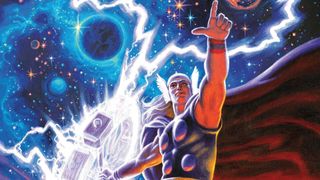
With the Marvel Studios films, Thor has gone from nonpareil in a long line of mythologic heroes people might know to arguably the most common mythological hero out there. (Sorry, Hercules).
Merely how similar is Marvel's variation of Thor to what helium was based along, the Thor from Geographical region mythology?

"I sometimes use this as a question along my final," laughed Merrill Kaplan, who teaches Norse literature and folklore to college students. "The comics got the basics right. Thor is a protector of mankind. And he's got his handy hammer. Those are grown. Just just around everything other is different."
Kaplan should know. Arsenic an assistant prof of Folklore and Scandinavian Studies at The Ohio State University, she's detected a lot close to Wonder's Thor from students.
"It's amusive having those guys in class, and they bring a certain amount of energy," Kaplan aforementioned, admitting that she's done a little comics research herself away meter reading some of comic book Godhead Walt Simonson's Thor - largely advised Wonder's definitive run - and all of The Ultimates, featuring a more contemporary, alternative versions of Marvel Universe heroes.
"But what's essential for them is to realize this is a different guy," Kaplan said. "This is not Wonder Thor that I'm talking almost [in year]. And it's fun to project them have that moment of confusion, and you get to watch what they observe disappointing, and then you contract to watch them get excited about the squeeze they never knew."
Kaplan enjoys how the Marvel Studios films have inspired more students to sign for Norse mythology classes.
"I have intercourse it when I get students who are interested," she same. "I engender Energy in my schoolroom."
So what are the similarities and differences between Wonder's Thor and his mythological inspiration?
Thor the superhero
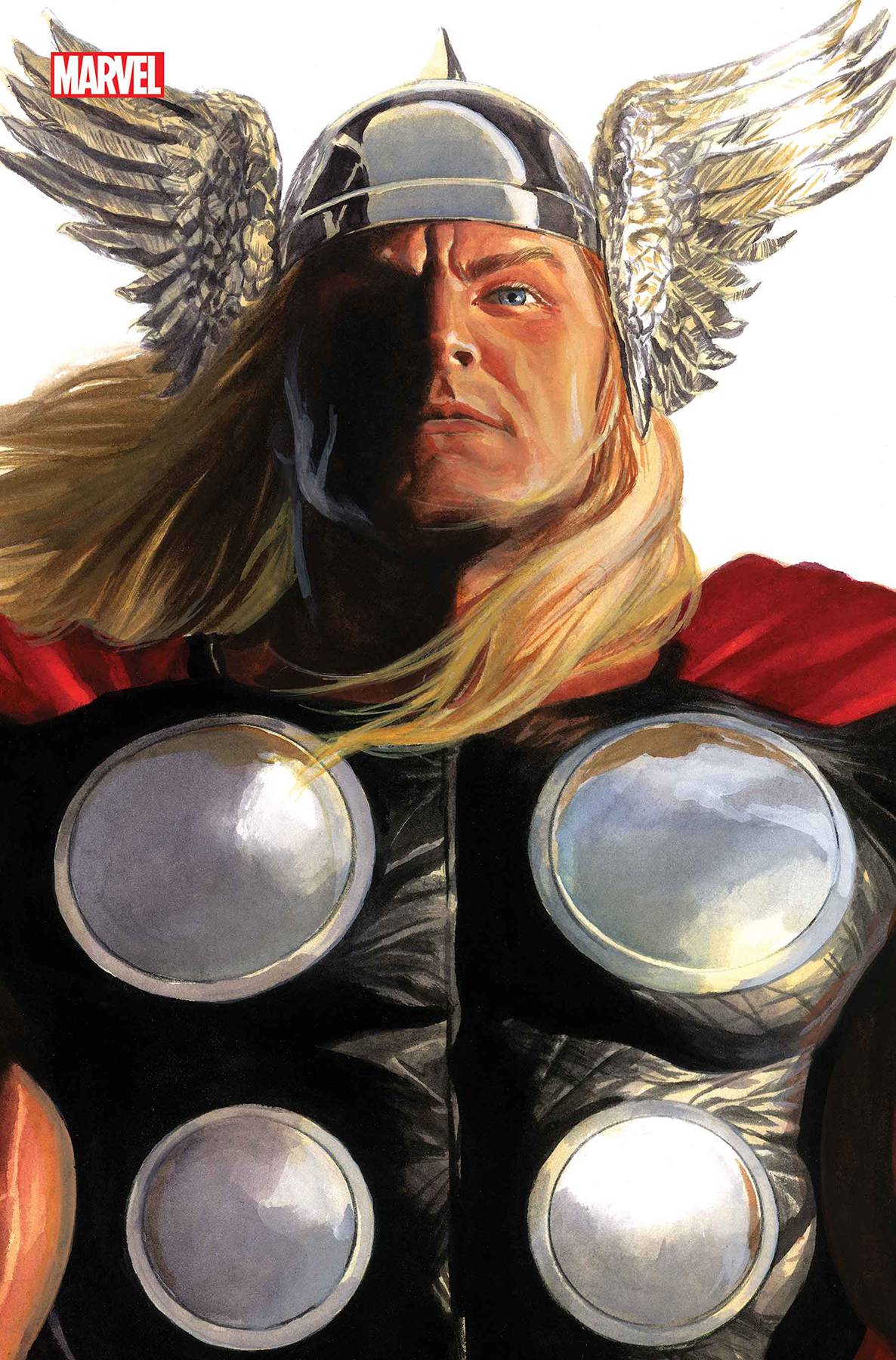
One of the most obvious aspects of Marvel's Thor is that he's a superhero, active permanently and defending those in need. According to Kaplan, that version of Thor isn't much of a stretch.
"The mythic Thor is, of the Norse gods, the combined closest to look like a human hero," she said, "so if you were going to extract a god from Norse mythology and make him into a hero working connected behalf of mankind, Thor's your man."
Simply Kaplan said "looking" the like a human hero doesn't think of his actual coming into court.
"What I mean is that Thor in mythology is a good deal heroic in this he runs out and battles and saves people. He's the defender of the kingdom of gods and men. He goes kayoed and smites trolls. He fights single," she said. "And in stories of human heroes, a great deal of them are monster-slayers. So of all the Norse gods, Thor fits unsurpassed therewith idea of a sub. The stories of Thor add up if you substitute a human in there. That's not faithful of stories about Odin or Loki."
Mjölnir, the power hammer of Thor
In the Thor comics and films, movie-goers will see Chris Hemsworth, who is playing Thor, wielding a hammer that is named Mjölnir, with a name and power that is similar to its roots in mythology.
"The hammer's extinct-on," Kaplan aforesaid. "The Thor in mythology has a pounding. Information technology really does return when atomic number 2 throws it. We never actually see that in the stories, but we'atomic number 75 told in one of our best sources that that is true. The boomerang matter is dead-on."
Thor's appearing and masculinity
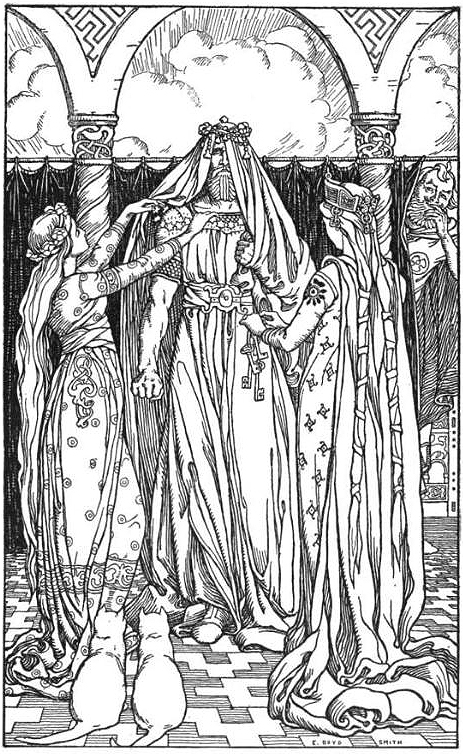
But Thor of mythology is expected to live a redhead and receive a beard, which Kaplan admits may sound "particular," only is related to the organization of Norse mythology in an important way.
"This was a society where beards are an important descriptor of masculinity, and Thor in the mythology is very much about the ideals of masculinity," she said. "You take that away from him and it changes who he is."
Kaplan cited a news report where others dress Thor up in women's clothing. "He absolutely flips. He's suchlike, 'wholly the other gods will call me a sissy!' And [the story's] totally astir him acquiring his forge back," she laughed. "See? Myths are great."
Although Kaplan admitted she has seen beards on the comic book versions of Thor — naming Marvel's Red Norvill as an illustration — she said the classic Marvel and MCU Thor as a sandy, blue-eyed god represents something very different from the traditional mythology.
"I'm not sure why he wasn't created as a redhead. I suppose you can make just about interpretations about what the blond is about. Afterwards all, we've got understandings all but what 'loved, blond' means.
"But there are things that it is non about, because, after all, this was [Jack] Kirby, who was Jewish," she aforementioned, naming the artist who originally co-created the Marvel character. "I believe it more often than not has to do with our melodic theme of what 'Scandinavian' is supposed to look like."
Odin and Loki
In the MCU,, Odin is played by Sir Anthony Hopkins, and Kaplan said the persona's portrayal contrasts greatly with the version from mythology.
"When I saw [the first film], the part when I really cracked up is when Anthony Hopkins scolds his son for bringing on war," she said. "But Odin in mythology starts wars, creates strife."
Kaplan explained that in Scandinavian mythology, the gods are usually battling the giants.
"During these perpetual battles with giants, Odin creates strife," she same. "Merely atomic number 2's not a close combat guy cable like Thor. Odin's contribution is often gathering knowledge and prophecy and magic stuff. His associations are with warfare, strife, poetry, and the type of magic that men are not questionable to do."
Odin frequently lies, and he engages in battles of words and knowledge, she explained. And no substance what, the gods e'er beat the giants — until the end, which is called 'Ragnarök,' where the giants finally beat the gods.
"[Odin is] also the one who steals poetry from the giants and brings it to gods and masses," Kaplan aforementioned. "But poetry is really an spirituous charming substance, and one of the words for poesy is also the word for madness, then He's also forgiving of associated with insanity, because IT's the idea that you're in a slenderly altered state when you compile.
Loki is a trickster in mythology, only like he is in the comics and movies.
"But he doesn't lie i, and he forever makes things right again," Kaplan said. "Typically, he makes trouble for the gods, and then he gets them tabu of it. He'll make contracts and mess things up. Then he has to be tricky in plac to make things right once again. So he's interesting because he's very untold some making trouble, just he doesn't lie. Odin lies day in and day out."
She said both Odin and Loki are put out-makers, but they're very different from their Marvel counterparts.
"Odin is a distressing jest at. Atomic number 2's dishonest and he makes afflict on a really, genuinely big scale, although he is trying to avert Ragnarök," Kaplan said. "Loki makes trouble; typically atomic number 2 fixes IT. There's single all important time when he doesn't: Atomic number 2's the one World Health Organization starts Ragnarök, then he takes down the entire mess, eventually. And then you tooshie pick up that, because Thor is very straight ahead, and connected your side, that's what makes him more like a human Hero."
Syndicate Differences
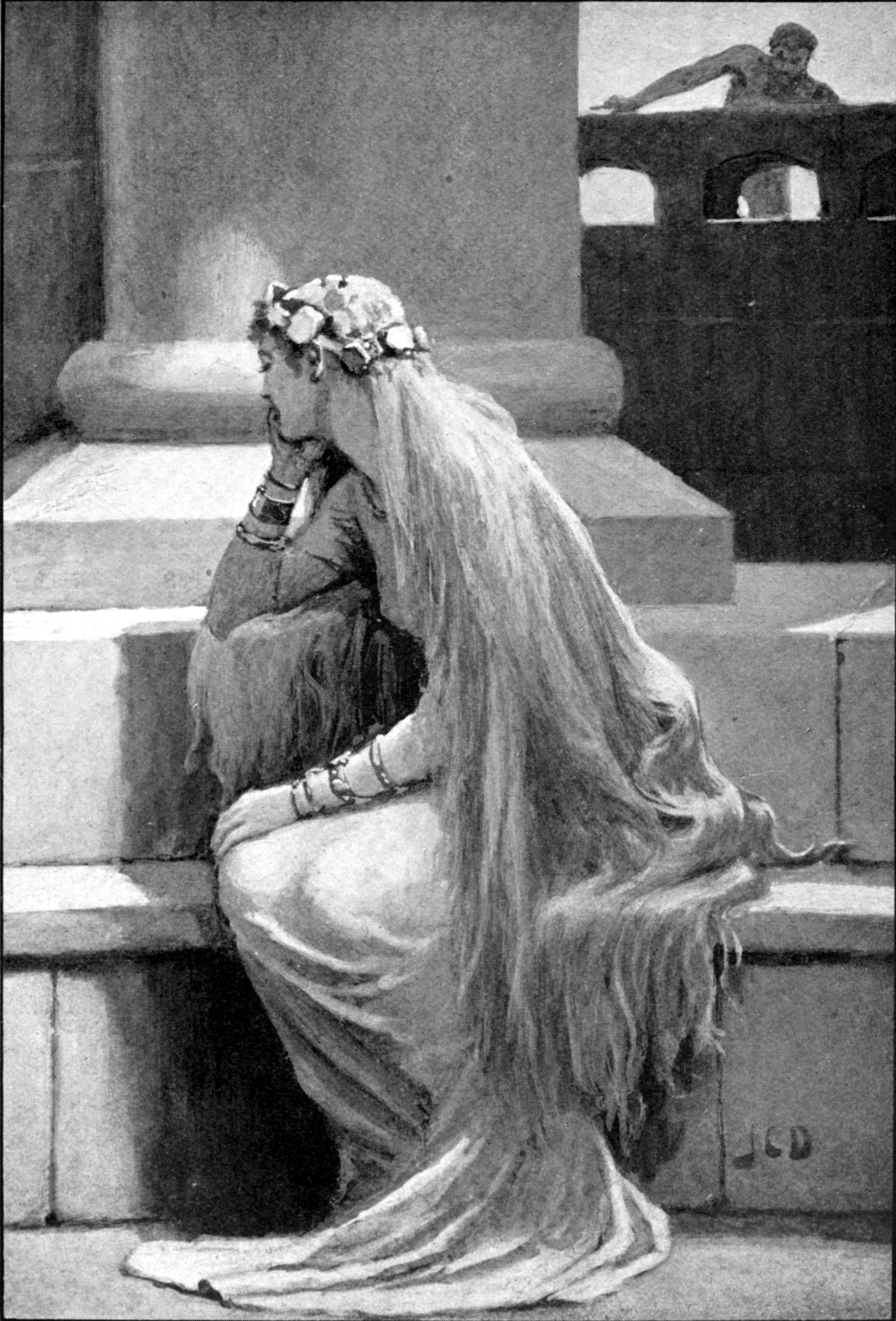
In mythology, Thor seems to be very often about the family unit, Kaplan said, which is something she hasn't seen addressed in the Thor comics.
"In mythology, his wife's constitute is Sif, but in mythology, she's not somebody with a sword [like she is in the comics and movies], which is regrettable. And in the mythology, she's blond, with a whole myth about why she's light-haired," Kaplan said, contrasting her with Marvel's brunet, brand-wielding Sif.
"His wife's name way something like 'kinship relation,' so there's something very basic about the family being part of Thor's profile. And when he's referred to not away name, but in terms of other things, he may Be very frequently called 'husband of Sif,' operating theatre 'Fatherhood of Magni,' or 'son of Odin,'" she said. "And the poetic language about him tends to be in terms of family."
The Age of Geeks
The addition of Thor (via the MCU) into pop culture is just another layer of Norse mythology's continuing endurance among geeks, Kaplan same.
"In its way, Norse mythology is still alive," she said. "I don't mean paganism is alive, although there are people who have tried to resurrect rituals regarding these stories. But there has never been a steer at which no one has been interested in this glut.
"When the age of Norse paganism sealed in history," she said, "the age of geeks opened."
The age of geeks?
Kaplan laughed, explaining that most of what we know about Norse mythology comes from monks and Christlike writers who weren't worshipping these gods, but were just "geeking out" roughly how "cool" the stories were.
"Some of them were work force in monasteries, professional men of the clergy, who thought these stories were really cool," she said. "It's the age of geeks that kept Norse myth animate. And I estimate it's what continues to donjon it reanimated."
Kaplan said there are also influences from Nordic mythology that most people father't even gain. For example, "Thursday" derives from "Thor's Mean solar day."
"Someone is ever appointment something afterward a Norwegian god or goddess or something in the myths," she same, citing Norwegian oil colour platforms called Thor and Odin. "In a way, the chronicle of Norse mythology is still going on."
While Kaplan doesn't consider the comic book stories to be "myths," she does think they'ray worthy of earnest study, and angulate out more than one of her colleagues at Ohio State who teach classes on comic books.
"Are [comics] stories that are very significant to USA and are Charles Frederick Worth analyzing as expressions of our culture? Completely!" she said. "Simply myths are narratives kick in the distant past or future about the cosmos institution of some same fundamental aspects of the cosmea and society, and which are regarded as true and sacred by somebody. Comics are really not about that, and they certainly are not hallowed. But hey, I think we can study them anyway."
And she doesn't psyche that the mythological Thor has been metamorphic for the comics and movies. "Nobody gets upset about the Disney version of Erithacus rubecol Hood, retributory because Robin Hood's non a fox," she said. "We keep telling stories to ourselves and victimisation them to think astir different things, and trying really consciously to have them have meaningful. And that's important in its own way of life."
Get to sure you've read totally of Marvel Comics' best Thor stories .

Source: https://www.gamesradar.com/marvel-thor-norse-thor-mythology/
Posted by: morrisonwarrhatiou.blogspot.com
0 Response to "How does Marvel's Thor measure up to his Norse counterpart? - morrisonwarrhatiou"
Post a Comment